

How to get your bike ready for winter on Oléron
A whole summer riding by the sea, then winter with its rain and salty air: this is when a bike wears out the most, often without you noticing. Here is our advice on bike maintenance on Oléron, the same steps we follow at the workshop, to get through winter with no rust, no seized parts and no rising bill in spring.
Bike maintenance on Oléron: why salt is unforgiving
On the island, salt is everywhere: in the sea spray, in the damp air, in the sand that sticks to your tyres. It settles in a thin layer on the bike, then rain and humidity dissolve it and carry it where nobody looks: under cable housings, into bolt threads, between the seatpost and the frame, around the wheel axles.
The trouble is, you don’t see it straight away. As it dries, the salt recrystallises into a kind of glue that jams moving parts. A few months later, a bolt snaps when you undo it, the seatpost is stuck in the frame or the brake cable no longer slides.
A bike that has been ridden by the sea all summer must be rinsed, dried and re-lubricated before winter. It is not a luxury: it is the difference between a bike that rolls again in spring and a bike that ends up on the scrap heap.
8 bike maintenance steps on Oléron to get through winter
1Rinse, dry, re-lube: the end-of-season trio
Rinse the bike with fresh water, a sponge and bike soap, focusing on the drivetrain, brakes and underside of the frame. No pressure washer: the jet forces grease out of the bearings and pushes salty water inside.
Then dry it carefully with a cloth and let it finish drying somewhere airy. A bike stored wet is a bike rusting quietly. Once dry, re-lube everything that moves: chain, derailleur pulleys, pivots, levers.
2Watch chain wear: your bike’s timing belt
On a car, the timing belt is a wear part you replace at regular intervals. Wait until it snaps and the engine goes with it, along with a huge bill. A bike chain works exactly the same way.
As you ride, the chain’s pins and rollers wear: we say it “stretches”. A stretched chain no longer sits neatly in the teeth of the cassette and chainrings. It wears them down, hollows them out and reshapes them to its own pitch. The result: when you finally replace the chain, the new one skips on the worn cogs, and the whole drivetrain (chain, cassette, sometimes chainrings) has to go instead of just a chain.
How do you know where it stands?
With a chain wear checker, a small tool that measures stretch in seconds. Common guidelines: replace the chain at 0.5% on 11-speed and higher drivetrains, and at 0.75% on 10-speed and lower. At 1%, the cassette often needs replacing too. By the sea, sand and salt act like grinding paste: a poorly maintained chain wears much faster.
At the workshop: we measure chain wear at every service. And even without booking, drop by the workshop: we check your chain for free, in a few seconds. It is the most cost-effective bike maintenance step on Oléron.
3Lube the chain with the right product
In winter, choose a wet-weather lube, which resists water better. Apply it to a clean, dry chain, one drop per link, turn the cranks, then wipe off the excess: the lube belongs inside the links, not on the outside where it traps sand. After every ride in the rain or sea spray, do it again.
4Protect bolts and parts that seize
This is the step almost everyone forgets, and it is where salt does the most damage. Steel bolts in an aluminium frame, the seatpost in the seat tube, the stem on the steerer, the wheel axles: wherever two metals meet and salty water gets in, corrosion welds the parts together.
At the workshop: we take the time to apply petroleum jelly oil (huile de vaseline) to every bolt exposed to rust (racks, mudguards, bottle cages, brake calipers…). We remove and re-grease the stem, the seatpost and even the wheel axles, so they can still be taken apart years later.
Careful with carbon: never put grease on a carbon seatpost, stem or steerer. Use a dedicated carbon assembly paste instead. If in doubt, ask us.
5Check the brakes and cables
On wet roads, braking distances get longer. Check pad wear and the condition of the discs. Look at the cables too: salty water sits inside the housings, the cable rusts from the inside and braking becomes stiff or stops returning. A sticking cable should be replaced; it never stays “freed up” for long.
6Check the tyres
Check pressure and wear, without going below the minimum shown on the sidewall. Remove small stones and shell fragments stuck in the rubber: on the island, they cause most punctures. A tyre with cracked sidewalls after a summer in the sun should be replaced.
7Look after your lights
Days are short, and many of the island’s cycle paths and small roads have no street lighting. You need to be seen, but above all to see where you are going: small emergency lights are enough to signal yourself in town, not to spot a pothole, sand or a branch on a dark path.
In France, working lights (white or yellow at the front, red at the rear) and reflectors are required. Outside built-up areas, at night or in poor visibility, a high-visibility vest is required too. Full details on the French government page Équipements obligatoires à vélo (Service Public).
At the workshop, we offer light kits designed for winter on the island: a proper beam at the front to see the road, and a highly visible rear light. Come and try them, we will advise you based on your bike and your rides.
8Store the bike under cover, and look after the battery
A dry, ventilated shelter is better than a tarp that keeps moisture against the bike. For an e-bike, bring the battery indoors at room temperature, partly charged rather than full or empty, and follow the manufacturer’s instructions. A wipe with a dry cloth on the connectors avoids poor contacts in spring. Well stored, well protected: the last step of good bike maintenance on Oléron.
When should you bring your bike to the workshop?
A chain that skips, gears that shift badly, spongy brakes, noise from the bottom bracket, rust on the cables or a seatpost that won’t move: it is time to come and see us. For bike maintenance on Oléron, winter is the best time for a full bike service in Saint-Pierre-d’Oléron: the workshop has more time than in summer and your bike will be ready for spring.
With the “hiver tranquille” lubrication option, we go further against damp and salt: petroleum jelly oil on the bolts, and the stem, seatpost and wheel axles removed and re-greased.
And if you dream of an e-bike, winter is also a good time to have your bike converted to electric.
Every bike can be repaired, except those that have gone without love and care for too long.
A little maintenance this winter, and your bike will pay you back in spring.
Bike maintenance on Oléron: frequently asked questions
Where can I get my chain checked on Oléron?
At the Cyclo’cool workshop, 12 rue Dubois Aubry, Saint-Pierre-d’Oléron. The chain wear check is free and takes a few seconds, with or without a service.
When should you replace your bike chain?
When its stretch reaches 0.5% (11-speed and higher) or 0.75% (10-speed and lower), measured with a chain wear checker. Replacing it in time avoids wearing out the cassette and chainrings, which cost far more.
Should you rinse your bike after a summer by the sea?
Yes, it is essential. Salt settles everywhere and keeps attacking the metal all winter. Rinse with fresh water and no pressure washer, dry carefully, then re-lube everything that moves.
Can you cycle in winter on the Île d’Oléron?
Yes. The island’s cycle paths stay open all year and winter is quiet. You just need a well-maintained bike, good lights and a chain protected against damp and salt.
How much does a bike service cost in Saint-Pierre-d’Oléron?
At the Cyclo’cool workshop, the service labour package costs €72 incl. VAT, parts extra. A diagnosis alone costs €25 for a regular bike and €35 for an e-bike, deducted if the repair is done at the workshop.
How should you store an e-bike battery in winter?
Somewhere dry, at room temperature and away from frost, partly charged rather than full or empty. Top it up now and then if the bike is not ridden, and follow the manufacturer’s instructions.
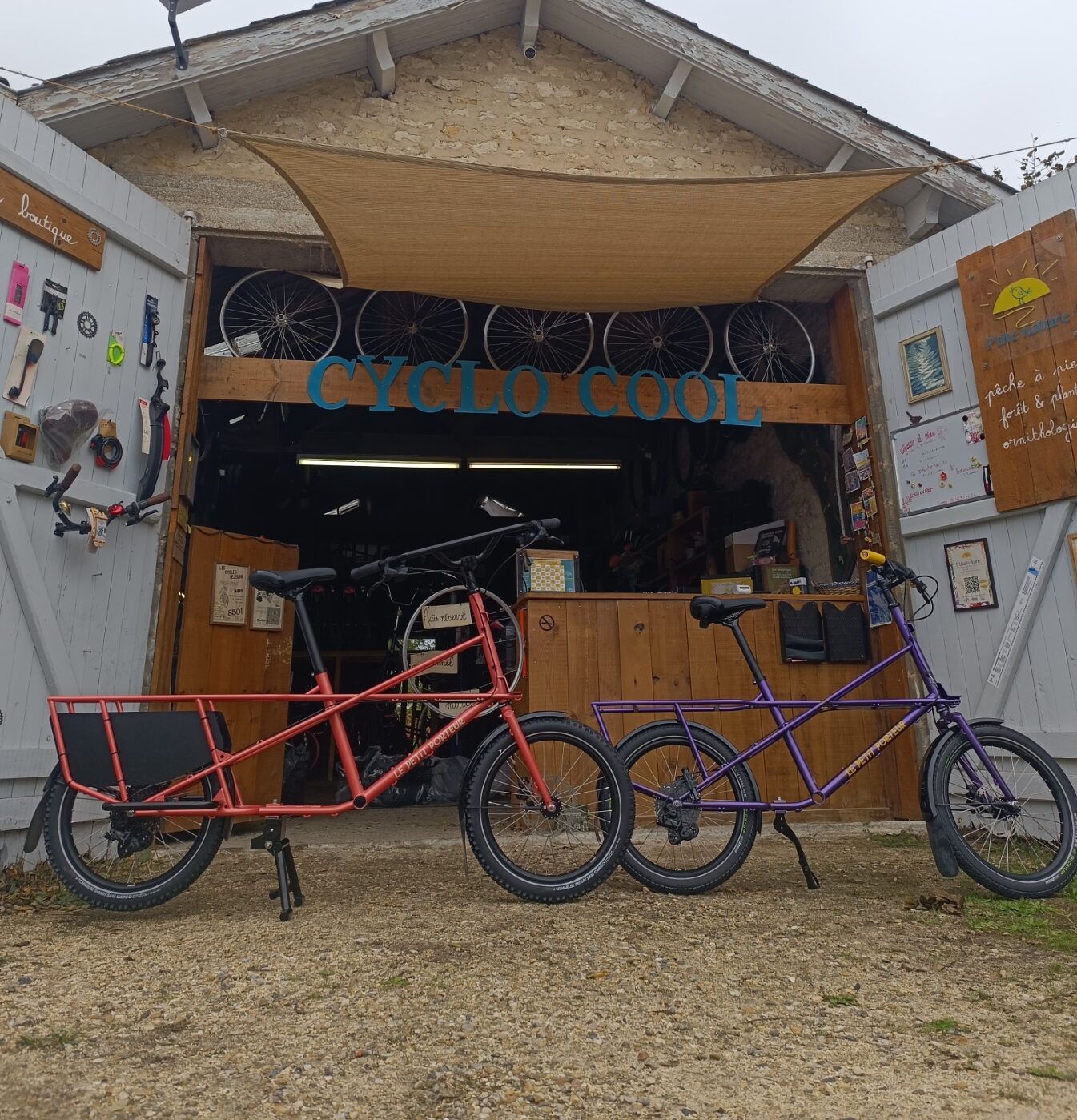
Drop by the workshop: free chain check, bike maintenance advice on Oléron and light kits to ride through winter with peace of mind. The Cyclo’cool workshop is at 12 rue Dubois Aubry, Saint-Pierre-d’Oléron, 300 m from the bus station. Opening hours are kept up to date on our Google listing.
+33 6 69 24 67 64Back to the website